
Few cities on the planet compress a lot visible ambition into walkable distances. Milan is certainly one of them. The streets between the Duomo and Brera learn like an open-air museum of style, the place Renaissance courtyards sit beside mid-century showrooms, and a single block can take you from Gothic spires to minimalist glass facades. For anybody with an eye fixed for design, this metropolis rewards sluggish strolling greater than fast sightseeing.
The problem, as any returning customer is aware of, will not be discovering lovely issues to have a look at. It’s managing the day properly sufficient to really see them. Heavy luggage, tight metro schedules, and the temptation to cease in each boutique on Through della Spiga can quietly derail even one of the best intentions. With a little bit of planning, although, Milan rewards those that transfer via it freely, with out the load of baggage in hand.
Beginning at Milan Centrale: The Structure of Arrival
Milan Centrale isn’t just a transport hub. It is without doubt one of the most theatrically designed practice stations in Europe. Accomplished in 1931, its monumental facade blends Artwork Nouveau element with Fascist rationalism, topped by reliefs, eagles, and huge stone arches that dwarf each arrival. Spend ten minutes exterior earlier than getting into. The interaction of scale and decoration is a deliberate assertion in regards to the metropolis you’re getting into.
For guests arriving by practice, the station is the pure start line of any baggage storage in Milan itinerary. Earlier than starting the stroll towards the Duomo, it is smart to lighten the load fully. The baggage storage by Milan Centrale supplied by Dishevelled Lockers permits you to deposit luggage securely and choose them up at any time, liberating you to maneuver via the town the best way it deserves to be skilled: each arms free, digicam prepared, unhurried. The distinction between dragging a wheeled suitcase throughout the cobblestones of Brera and strolling the identical streets unencumbered will not be a minor one.
From Centrale to the Duomo: The Corso Buenos Aires Hall
The stroll south from Milan Centrale towards the centre passes via one of many metropolis’s densest retail corridors, Corso Buenos Aires, an extended straight stretch lined with inexpensive vogue chains, unbiased idea shops, and the occasional sudden gallery. It isn’t the glamorous Milan of the style magazines, however it’s the Milan that most individuals really reside in, and it has a visible vitality of its personal.
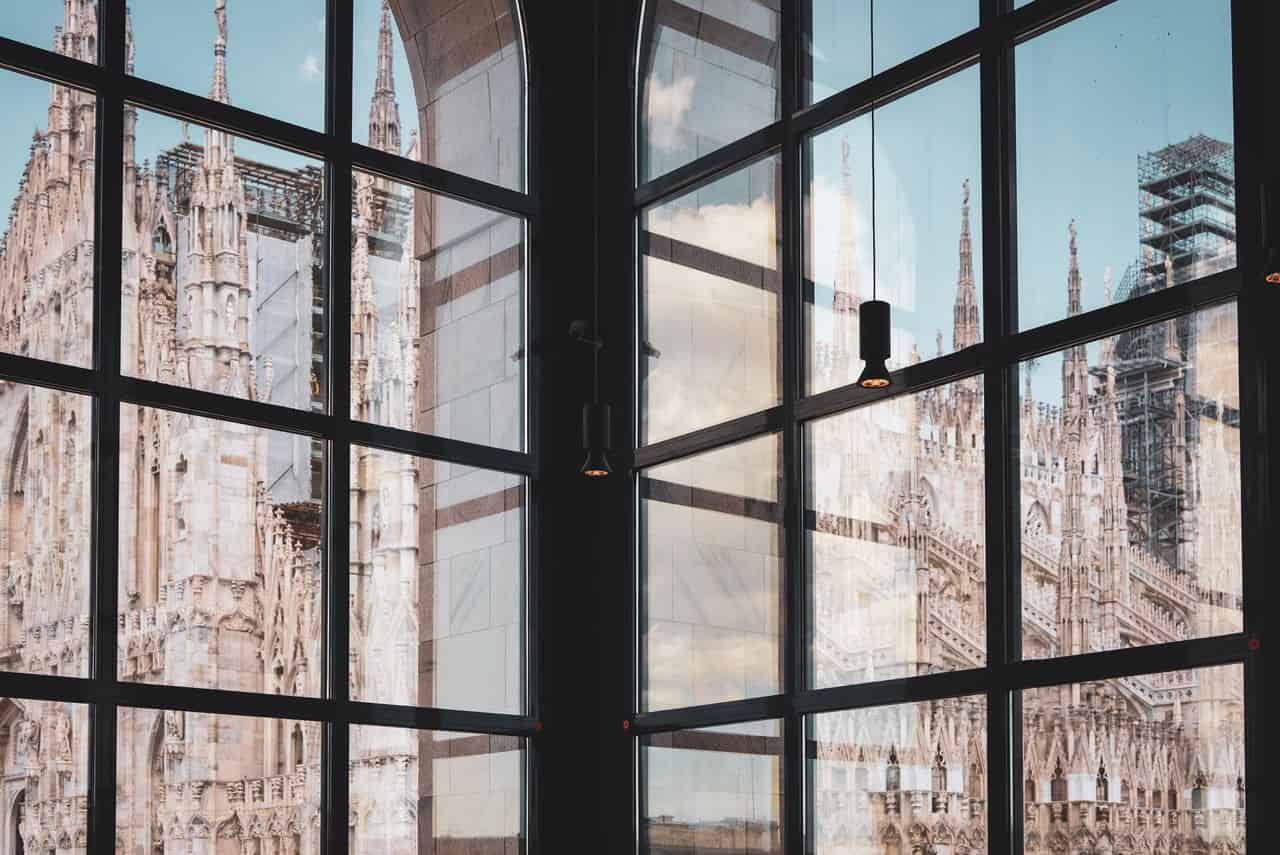
From Piazza Venezia, the town opens up as you method Piazza del Duomo. The cathedral itself, a Gothic challenge that took almost six centuries to finish, is the one most photographed constructing in Italy after the Colosseum. What images by no means fairly convey is the density of its floor: greater than 3,400 statues, 135 gargoyles, and 52 exterior pillars. If structure is the topic, the rooftop stroll is necessary. From the marble terraces you look throughout the town’s roofline towards the Alps on a transparent day, with the Madonnina gilded statue rising immediately above.
Adjoining to the Duomo, the Galleria Vittorio Emanuele II deserves greater than the jiffy most guests give it. Constructed between 1865 and 1877, it’s among the many oldest buying galleries in Europe, and its iron-and-glass vaulted ceiling stays a excessive level of Nineteenth-century engineering. The ground mosaics characterize the coats of arms of Italy’s 4 capital cities. The custom of spinning on the bull mosaic from Turin is innocent folklore, however the structure above it’s the actual cause to linger.
Brera: The Neighbourhood That Defines Milan’s Inventive Id
A 15-minute stroll north from the Duomo brings you into a distinct Milan. Brera started constructing its fame in 1776 when Empress Maria Theresa of Austria commissioned the Academy of Advantageous Arts on Through Brera, establishing the neighbourhood as a gathering level for artists, architects, and intellectuals that it has remained ever since. The Pinacoteca di Brera, housed in the identical palazzo, holds certainly one of Italy’s most interesting collections of northern Italian portray, together with Mantegna’s arresting Lamentation of Christ.
Past the gallery, the neighbourhood is greatest skilled as a sluggish stroll quite than a guidelines. Through Fiori Chiari and Through Madonnina are the streets to prioritise: cobblestoned, slim, lined with vintage outlets, unbiased boutiques, and design showrooms that don’t announce themselves loudly. Palazzo Citterio on Through Brera is value noting for its 18th-century facade; so is the courtyard behind the Academy, the place the tempo slows and the town noise drops. Throughout April’s Fuorisalone design week, all the district transforms into an outside exhibition house, with courtyards and studios opening to the general public and worldwide manufacturers launching collections in sudden venues. The remainder of the yr it’s quieter, and arguably extra attention-grabbing for it.
The Procuring Quadrilateral: Trend as Structure
East of Brera, the Quadrilatero della Moda, the style district anchored by Through Montenapoleone, Through della Spiga, Through Sant’Andrea, and Through Manzoni, operates at a distinct frequency. That is the place the most important worldwide homes have their flagship shops, and the design of every inside is usually as thought-about as something in a gallery. Prada, Versace, Armani, and Dolce & Gabbana have every used their Through della Spiga or Montenapoleone addresses as architectural statements, commissioning interiors that say one thing particular in regards to the model’s identification.
Even with out spending, the Quadrilatero rewards cautious consideration. Window shows through the vogue seasons attain a stage of visible sophistication that’s genuinely value learning, and the material of the buildings themselves, many relationship from the 18th and Nineteenth centuries, supplies a backdrop that no new-build buying district can replicate. The neighbourhood can be compact sufficient to cross fully on foot in beneath twenty minutes, which makes it a pure finish to a day that began at Centrale and moved via the centre.
Shifting By means of the Metropolis With out the Weight
Milan will not be Rome. The distances are manageable, the streets are flat, and the general public transport is dependable. What slows most guests down will not be the geography however the logistics: checking baggage on the lodge, returning to gather luggage earlier than a night practice, or navigating the metro with a full backpack throughout rush hour.
The smarter method is to depart luggage in baggage storage close to the arrival or departure level and acquire them solely when wanted. That behavior additionally suits how the town has been altering. Since 2018 Milan has transformed roughly 56,000 sq. metres of street house into pedestrian areas via its Piazze Aperte programme, round sixty interventions in whole, as documented on this European Fee case examine on the town’s tactical urbanism. The centre retains getting higher for anybody on foot. Good news, except you’re the one dragging a hard-shell trolley throughout a resurfaced sq. at eleven within the morning. Stroll the route unencumbered and Milan offers again greater than it asks.
A Observe on Timing
Milan’s vogue and design calendar has its personal logic. Trend Week in February and September and Design Week in April are the moments when the town is most alive creatively, but in addition most crowded and costliest. Outdoors these home windows, notably in October and November, the town gives the identical structure and the identical neighbourhoods at a significantly extra relaxed tempo. The sunshine in late autumn can be, for photographers, essentially the most flattering the town will get.
Everytime you go, the itinerary holds. Centrale, the Duomo, the Galleria, Brera, the Quadrilatero: this can be a route that strikes via Milan’s layers of design and vogue in sequence, from the monumental to the intimate, from public spectacle to a quiet courtyard with a espresso. Begin gentle, stroll slowly, and save the buying choices for after the structure has had its correct due.
